Read Charlotte Listening Comprehension Resource Center

Developing strong listening comprehension skills during, and beyond, the early elementary grades will support students’ reading comprehension ability. Learn about, teach, and assess listening comprehension using the Read Charlotte Listening Comprehension Resource Center. 

Cheerful female teacher helping girl with homework in classroom, black schoolgirl writing in notebook, sitting at desk with classmates on background

The Knowledge Base

The Knowledge Base offers a curated set of recent evidence-based research findings intended to help practitioners better understand listening comprehension and its connection to other literacy skills (such as word reading, reading fluency, background knowledge, and reading comprehension).

Search the Materials Directory

Filter by listening comprehension skill, grade, and/or standard (NC ELA Anchor Standard an/or NC Foundations for Early Learning and Development), to find resources to target listening comprehension in the classroom. 

All
Activity 168
Assessment 5
Intervention 4
Platform 6
Practice 2
Resource 5
Routine 15
Strategy 11
Supplemental Curriculum 7
Tool 11
Students will practice matching definitions with corresponding words.
Grade Level(s)
Cost
Students will determine the main idea and supporting details of an expository text.
Grade Level(s)
Cost
Students take turns rolling a dice with questions to prompt discussion about a text.
Grade Level(s)
Cost
Students choose words from a text and generate a definition.
Grade Level(s)
Cost
In this activity students will compare/contrast characters in fiction texts.
Grade Level(s)
Cost
Students identify the main idea and supporting details of paragraphs in a text.
Grade Level(s)
Cost
This resource is a framework for teaching students the importance of monitoring their understanding while listening to a text
Grade Level(s)
Cost
This activity engages students in selecting words that describe different pictures.
Grade Level(s)
Cost
Students identify similarities and differences of target vocabulary words based on their meaning.
Grade Level(s)
Cost
The Qualitative Reading Inventory (Seventh Edition) (QRI-7) assesses students’ literacy skills through graded word lists, leveled-passages, and explicit and implicit questions following oral and silent reading.
Grade Level(s)
Cost
Word Generation Elementary supports students’ vocabulary and knowledge development through an integrated literacy approach.
Grade Level(s)
Cost
Students categorize transportation words into categories of air, water, and land.
Grade Level(s)
Cost

Master Listening Comprehension Skills in the Classroom

Listening comprehension is one of two primary processes that contribute to successful reading comprehension. Teaching these skills early, intentionally, and concurrently with word reading can develop strong reading comprehension.

Listening comprehension is comprised of a set of higher- and lower-level language skills. The higher-level language skills include: inference, perspective-taking, reasoning, comprehension monitoring, and text structure knowledge. The lower-level language skills are: vocabulary and grammatical/syntactic knowledge. Learn more and find resources aligned to each skill below.

Who We Are

Read Charlotte is a community literacy initiative that unites educators, community partners, and families to improve children’s reading from birth to third grade.

We don’t run programs. We are a capacity-building intermediary that supports local partners to apply evidence-based knowledge about effective reading instruction and interventions, high-quality execution, continuous improvement, and data analysis to improve reading outcomes.

Read Charlotte is a civic initiative of Foundation For The Carolinas.

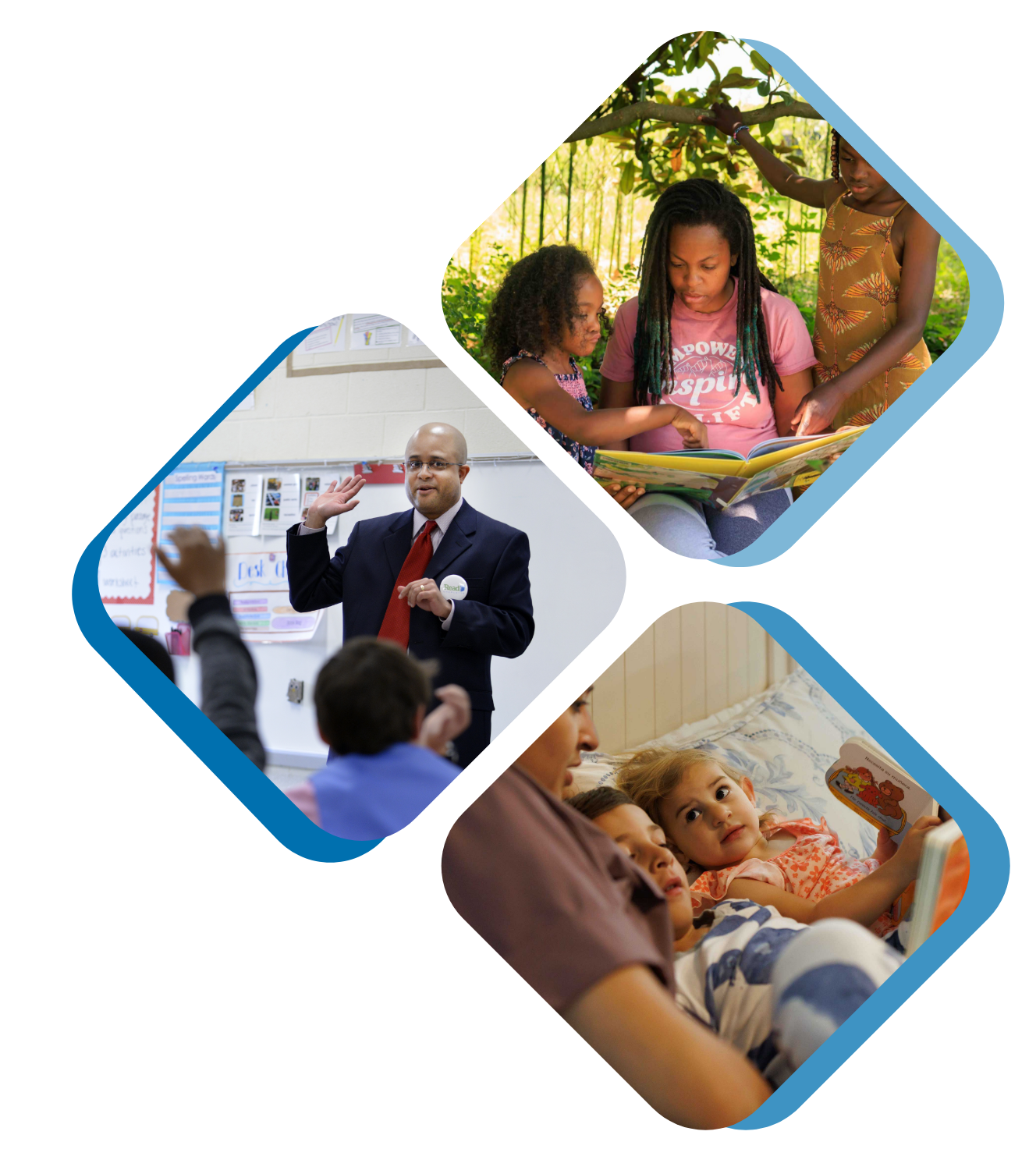
Assorted images showing Read Charlotte working in the community

Newsletter Sign Up

Sign up and we’ll update you as we add new resources to support your classroom listening comprehension instruction.

Share your feedback on the Listening Comprehension Resource Center